

Constant updates are made to our site so check back often! You can use the Contact page to get in touch if you want to know something specific!
The dazzling world of sports predictions isn’t just fueled by blind luck and catchy fan chants. There’s a mathematical rhythm beneath the surface and at its core lies the fascinating dance of Conditional Probability Distribution. Understanding this concept is your ticket to evaluating uncertainty, spotting trends and making sense of the unpredictable tapestry that defines athletic competition.
Imagine each sporting event as a branching tree: every play, pass or pitch can grow new branches, leading to diverse results. This metaphor isn’t just poetic-it’s mathematical. Probability trees help map out possible outcomes and the likelihood of each, laying a solid foundation for analysis. Think of it as the difference between wandering in a fog and bringing a lantern.

So, how does one branch affect another? That’s where Conditional Probability Distribution shines. It answers the question: “If this play just happened, what’s the chance of that next thing happening?” Instead of treating every moment as an isolated incident, it reveals hidden patterns by connecting the dots.
If arithmetic brings you back to traumatic school days, don’t worry-modern models and handy calculators have made it less of a numbers nightmare. The central formula might look intimidating, but it’s essentially about updating beliefs based on fresh information. The only real danger is developing a smug sense of mathematical superiority at family gatherings.
Let’s take a pit stop and talk about how these concepts interact in practice. If you’re evaluating your chances, it’s not about certainty, but about managing expectations with finesse. Conditional Probability Distribution brings context into calculations, nudging outcomes one way or another based on real events-not superstition or lucky socks.
A little reminder-there’s no such thing as guaranteed success in sports predictions. Conditional Probability Distribution provides a more informed way to think about risk, not a way to eliminate it. There’s always the possibility of upsets, fluke results or the fabled “bounce of the ball.” Caution and moderation are always the smartest strategies.
Picture a baseball game where the pitcher is on a hot streak. Does the next batter have a lower chance of getting on base? The answer depends on how past performance shapes future probabilities-precisely what Conditional Probability Distribution was made for. The approach helps adjust predictions as real action unfolds, grounding analysis in evolving evidence rather than wishful thinking.
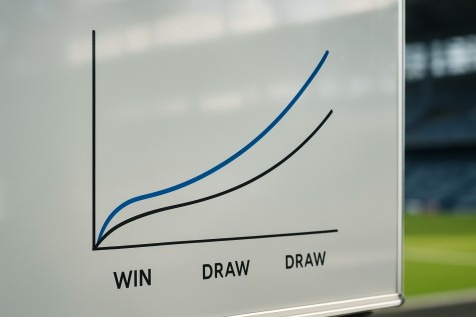
Sports, like life, rarely follow a perfect script. Yet with Conditional Probability Distribution, you can respond to changing circumstances in a measured, data-driven way. Whether it’s a sudden injury or a last-minute substitution, the numbers are nimble enough to keep up-well, most of the time.
It’s all too easy to misread statistics or assume that one hot streak guarantees another. Overfitting-seeing patterns that aren’t really there-is the arch-nemesis of good analysis. Remember, the universe isn’t out to get you, but neither is it obliged to follow tidy mathematical laws in every inning.
Let’s be honest: anyone claiming to predict every outcome with pinpoint precision is more magician than mathematician. Instead, use Conditional Probability Distribution as a sensible guide, not a crystal ball. Focus on realistic models and resist the urge to chase every tempting statistic down a rabbit hole.
Beneath every big decision is a network of probabilities-some visible, some not. Conditional Probability Distribution is the backstage pass to these calculations, letting you see the machinery behind informed choices. While luck still has a say, smart analysis keeps you prepared when fate takes a surprise turn.
Data isn’t static and neither are predictions. Adjusting your approach as events unfold is not just wise, but necessary. Each new outcome is a clue, adding context to the bigger picture. Those who learn to adapt swiftly gain an advantage-provided they don’t trip over their own spreadsheets.
Let’s admit it-not every scenario lends itself to mathematical rigor. Gut feeling, local weather reports or a team’s morale sometimes trump the numbers. Conditional Probability Distribution is a powerful ally, but it’s not a substitute for common sense or sound judgment.
The world of sports will always be unpredictable, but Conditional Probability Distribution offers a rational approach to navigating the twists and turns. Remember, every event is a new piece of the puzzle and informed analysis helps bring the full picture into sharper focus. Stay smart, stay skeptical and enjoy the ride-numbers and all.