

Ever looked at 51 and wondered if you needed a calculator, a stiff drink or both Fractional odds in sports are everywhere, yet understanding them without losing your shirt is the difference ....
If you’ve ever gazed at a British sports book and wondered whether the odds displayed are part of an ancient math riddle or perhaps a secret recipe, you’re in the right place. Fractional Odds In Sports aren’t sorcery-they’re just another way to show probability and payout. This guide gives you the inside scoop on Fractional Odds In Sports, why they exist and how they could affect your next wager (no decoder ring required).
You don’t need to be a math whiz or have a long-lost relative in London to use Fractional Odds In Sports. They’re simply a different way to display potential payouts, especially popular in the UK and Ireland. These odds show your possible profit relative to your stake, often written as 5/1 or 3/2. That first number? It tells you what you stand to win. The second? That’s your stake amount.
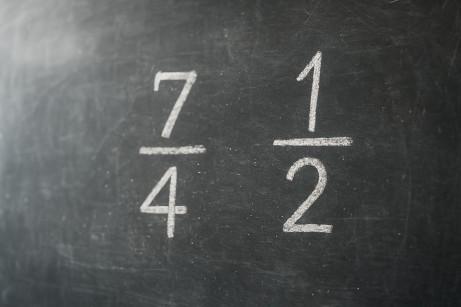
Let’s take a deep breath and a step back. Say you see odds of 7/2 next to your favorite football team. This means for every $2 you wager, you’ll receive $7 in profit if your team comes through. Add your $2 stake back and you’ll walk away with $9. No calculus degree necessary!
While many in the United States are more familiar with the plus/minus style of American odds, Fractional Odds In Sports may be encountered more often as global sports betting expands. The key difference is the format: Fractional Odds are ratios, while American Odds are either positive or negative numbers based on $100 stakes or returns.
Much like afternoon tea and driving on the left, Fractional Odds In Sports are a cultural preference. They stick around because they’re intuitive once you know what to look for and many find it easier to see at a glance how much profit is up for grabs.
Before you dash off to back the underdog with 25/1 odds, it’s worth pausing for a sanity check. Responsible betting means knowing the math, understanding the risks, and-above all-having fun without emptying your wallet.
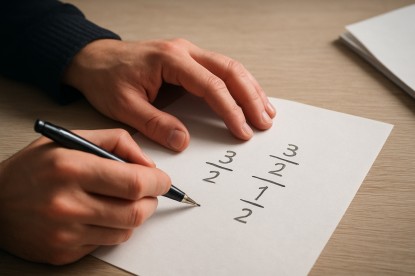
Let’s say you fancy a wager on a team listed at 4/1. For every $1 you stake, your potential profit is $4. Add your original dollar back and you’re pocketing $5 if your prediction is correct. No magic-just arithmetic.
It’s easy to be lured in by long odds, but remember: bigger numbers don’t always mean better value. Think about probability, not just potential profit. A team listed at 50/1 is unlikely to win, even if the payout makes you daydream about new cars.
Fractional Odds In Sports are used across everything from soccer to horse racing and occasionally even baseball for those rare international matchups. Different sports and events may show odds in slightly varied formats, but the math remains constant.
If there’s one place where Fractional Odds are king, it’s the racetrack. Odds like 10/3, 9/2 or even 33/1 can be found on the board. Each number reflects both the implied probability and the potential profit.
Most American football and basketball odds use the moneyline, but international books may slip you a fraction or two. Don’t panic; just convert using the ratio method and you’ll know your possible payout.
It’s time for the main event: turning odds into real numbers. Let’s examine how to calculate winnings with Fractional Odds In Sports and the unique way payouts are displayed in this format. For instance, if you place a bet at odds of 3/1, for every dollar you stake, you would win three dollars-plus your original stake back-should luck (and a little research) be on your side. Remember, no outcome is guaranteed and all wagers carry risk.
There’s no secret handshake for finding out your winnings with Fractional Odds In Sports. Just multiply your stake by the fraction, then add your stake back in. So, if you bet $50 at 2/1, your potential profit is $100, with a total return of $150. And, yes, you’ll want to check your math before planning a vacation!
One fun party trick (depending on the party, of course) is converting Fractional Odds to probabilities. Divide the denominator by the sum of both numbers. For 4/1 odds: 1 / (4+1) = 0.20 or a 20% implied probability. Just don’t try to impress your date with this unless they also enjoy spreadsheets.
Despite what you might hear from your neighbor or that enthusiastic fan at the bar, Fractional Odds In Sports are neither impossible nor a guarantee of massive riches. They’re a clear, straightforward way to present risk and reward. Avoid the myths, keep it factual and bet within your means.
No, higher fractions do not always mean the team is a sure winner. In fact, they’re often long shots! It pays (sometimes literally) to read the odds carefully and understand what you’re actually risking.
Set a budget, know your limits and avoid chasing losses. If you treat betting like entertainment-not as a shortcut to wealth-you’ll find the experience a lot more enjoyable. And if your hunches are off, hey, at least you’ve got some math skills to show for it.
While the numbers may look different, the fundamentals are universal: know the odds, understand the risks and remember that wagering is never a sure thing. Whether you’re calculating a 7/4 payout or pondering a 12/1 underdog, Fractional Odds In Sports add a layer of excitement-and, with a bit of knowledge, confidence-to your next sports wager.